
News
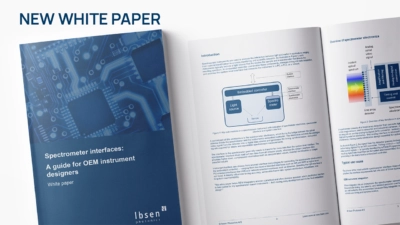
Spectrometer Interfaces: A Guide for OEM Instrument Designers
2026-09-16
Choosing the right interface technology for connecting a spectrometer to an embedded controller is a critical decision for instrument builders. Options like SPI, MIPI, USB, and Ethernet each come with trade-offs that directly impact timing accuracy, frame rate, system architecture, robustness, and long-term maintainability. Our new white paper, “Spectrometer Interfaces: A Guide for OEM Instrument Designers,” provides practical guidelines to help you navigate this decision for your specific application. In this paper, you’ll: Understand the fundamentals of how USB, Ethernet, SPI, MIPI, and Camera Link operate. Compare key characteristics, including maximum frame rate, latency, and implementation complexity. Access a clear
The spectral engine behind next generation light and display quality
2026-08-18
In modern light and display systems, visible light spectral data has become essential for achieving consistent color, brightness, and performance across devices and production environments. As form factors shrink and integration demands grow, compact and fast OEM spectrometers offer a reliable way to monitor and control optical output directly inside the manufacturing line. Our Visible light (VIS) spectrometers are designed specifically for demanding needs in light and display quality control. Due to our fused silica transmission grating technology the spectrometers deliver high throughput, low stray light, and excellent wavelength stability across the full visible range defined in common lighting and
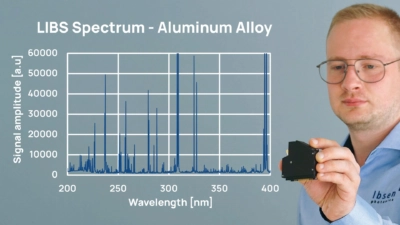
Key spectrometer features for high performance LIBS
2026-06-18
Laser‑Induced Breakdown Spectroscopy (LIBS) is a powerful technique for fast, multi‑element analysis, and widely used for metal alloy characterization in the metals industry. A LIBS instrument uses a high‑energy laser to create a plasma, and a spectrometer to capture the resulting emission. But how do you choose the right spectrometer for your LIBS instrument? Here are the features that matter most: High resolution to separate dense emission lines across the UV, VIS or NIR range High sensitivity to detect weak spectral features in complex plasma signals Accurate timing control to capture the plasma at the exact right moment Ruggedized, thermally
Maximizing Sensitivity and Efficiency with Fused-Silica Transmission Gratings in UV-VIS Spectrometers
2026-05-18
Did you know that fused‑silica transmission gratings can be used for UV-VIS spectroscopy? In many applications, only the UV-region is of interest and typically instruments are designed with reflective blazed or holographic gratings. However, our transmission gratings - etched directly into fused silica - can often outperform all other types of gratings. This plot shows how our 2421 lpmm fused‑silica transmission grating delivers higher diffraction efficiency across the entire UV-region compared to commonly used reflective blazed and holographic gratings. This performance is achieved through a precisely engineered tooth profile and the near‑100% transmission of the thin fused‑silica substrate. Find out about the advantages
Gratings and spectrometers for photonics, semiconductor, and industrial sensing at OPTATEC 2026
2026-04-21
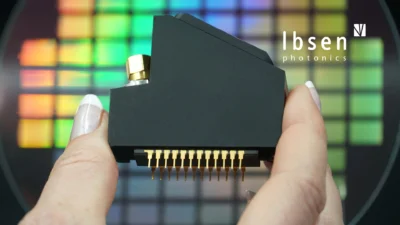
At OPTATEC 2026, we’re highlighting how our UV‑VIS, NIR, and Raman spectrometers empower the photonics, semiconductor, and industrial sensing communities to build faster, more sensitive, and more reliable optical instruments. With seamless instrument-to-instrument transferability, these spectrometers are ideal for a wide range of applications, delivering stable, and repeatable performance. From thin‑film characterization to endpoint detection to real‑time chemical process control, we provide the spectral engines that keep modern optical and manufacturing systems running with precision. You can select from a comprehensive range of wavelength options and platforms, including: The high-sensitivity EAGLE and ROCK spectrometers, ideal for Raman and NIR applications