
OEM Spectrometers for gas and oil sensing in harsh environments
High‑performance spectral sensors for advanced gas and oil monitoring
Most optical gas sensors rely on single‑wavelength filters or narrowband IR emitters – effective for basic detection, but limited when higher accuracy, selectivity, or multi‑species analysis is needed. Ibsen Photonics’ OEM spectrometers for gas and oil sensing provide full‑spectrum UV or NIR measurements, allowing manufacturers to build advanced systems with superior sensitivity, long‑term stability, and deeper analytical insight.
Engineered for harsh, explosive, and mission‑critical environments
Sensors for gas and oil monitoring must operate flawlessly under extreme conditions – vibration, temperature swings, dust, humidity, and ATEX‑classified zones. Our fused‑silica transmission‑grating spectrometers are built for this reality, delivering the thermal stability, optical throughput, and long‑term robustness required for:
Why choose Ibsen’s spectrometers for gas and oil sensing?
As a dedicated OEM supplier, Ibsen Photonics provides high-performance spectrometer modules designed specifically for seamless instrument integration. We specialize in the precision optomechanical hardware that serves as the core of modern spectral sensing instruments. With ISO 9001 certification and a proven track record of shipping thousands of units annually, we are the trusted partner for high-volume applications.
Why leading OEMs partner with Ibsen:

Why use optical spectroscopy in gas and oil sensing?
Why use optical sensing?
Optical spectroscopy offers several advantages over traditional gas sensing technologies such as electrochemical, catalytic bead, metal oxide, or capacitive sensors. Because the measurement is based on light rather than chemical reactions or heated elements, optical systems operate without physical contact, require very little maintenance, and remain stable over long periods of time. They are also naturally safe in explosive environments since the sensing head contains no electrical ignition sources. With fiber optics, the light can be guided directly to the measurement point while the spectrometer is placed safely away from heat, vibration, or hazardous areas.
Why use full spectrum?
Full spectrum UV or NIR analysis provides a much deeper understanding of the sample than single wavelength or filter based sensors. Instead of measuring only one absorption line, the spectrometer captures the entire optical fingerprint of the gas or hydrocarbon. This improves accuracy, increases selectivity, and makes it possible to distinguish between multiple species in complex mixtures.
Can Raman spectroscopy be used for gas sensing?
Raman spectroscopy can be used for gas analysis; however, the inherently weak scattering signals – often several orders of magnitude weaker than absorption features – demand highly sensitive spectrometers. Achieving usable performance typically requires a combination of high‑efficiency transmission gratings to maximize throughput, high‑NA collection optics to capture as many scattered photons as possible, and a cooled detector that supports long integration times without excessive noise.
Monitoring of Fiber Bragg Grating optical sensors
Fiber Bragg Grating (FBG) sensors are increasingly used in the gas and oil industry to monitor temperature, pressure, and structural strain in wells, pipelines, and downhole equipment. Their passive, electrically safe design makes them ideal for hazardous or high‑temperature environments. Because each FBG encodes changes as a precise shift in its Bragg wavelength, a spectrometer capable of resolving small center‑wavelength movements across many peaks is essential for accurate, real‑time monitoring.
Where are spectrometers used in gas and oil sensing?
Toxic gas monitoring in the UV range
Many hazardous gases have strong absorption features only in the ultraviolet region. UV spectroscopy enables sensitive detection of sulfur dioxide, nitrogen dioxide, and ozone, which are critical for emissions control, combustion monitoring, and industrial safety. These gases cannot be measured effectively in the NIR, making UV spectroscopy the preferred method for high‑selectivity toxic gas analysis.

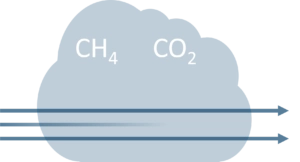
Greenhouse gas and hydrocarbon sensing in the NIR range
Near infrared spectroscopy is widely used for detecting gases with strong overtone absorption bands, including methane around 1650 nanometers and carbon dioxide around 1600 and 2000 nanometers. These features allow accurate leak detection, emissions monitoring, and process control in pipelines, biogas plants, and energy production facilities.
Process and safety monitoring in industrial environments
Full spectrum UV or NIR analysis provides deeper insight than single wavelength sensors by capturing the complete optical fingerprint of the gas mixture. This improves selectivity, reduces false alarms, and enables multi species detection in complex industrial settings.

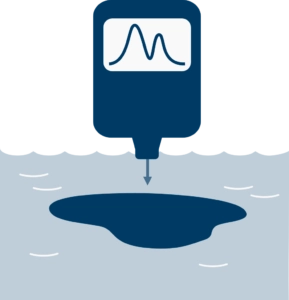
Oil in water and hydrocarbon contamination monitoring
UV fluorescence and NIR absorption are powerful tools for detecting aromatic and aliphatic hydrocarbons in water streams. This is essential for offshore platforms, refineries, and wastewater treatment, where early detection of oil contamination supports environmental compliance and process optimization.
Our Spectrometers for gas and oil sensing
All Ibsen spectrometers are built around our proprietary, in-house manufactured fused-silica transmission gratings, which deliver the world’s best diffraction efficiency. Our modules are engineered to be compact, rugged, and thermally stable, enabling instrument designers to focus on system-level innovation rather than the spectrometer unit.
For developers of absorbance-based instruments in the UV and Near-Infrared (NIR) spectra, we provide a versatile range of platforms that can be tailored to your performance requirements such as:
We commonly customize OEM spectrometers to specific instrument requirements ensuring the right balance between cost and performance.
For more information about our spectrometers for the various spectroscopic techniques please select below.
UV: UV (190-435 nm)
NIR: NIR (900-2100 nm)
Raman: 532 | 785 | 830
I-MON: OEM | USB | High speed | DISB
More resources
Want to know more?
For further information see below.