
OEM spectrometers for semiconductor manufacturing
Spectrometers for semiconductor manufacturing
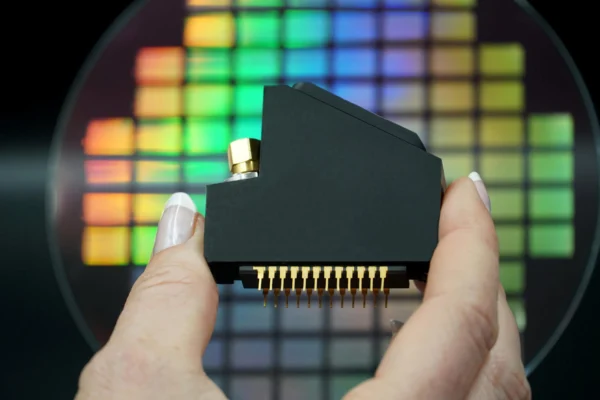
Semiconductor fabrication demands extreme precision, fast feedback, and highly stable measurement tools. Optical spectroscopy is central to modern semiconductor metrology because it delivers non‑destructive, high‑speed, and highly sensitive measurements directly in production environments. Ibsen’s spectrometers are designed specifically for OEMs building advanced metrology and process‑control tools for high‑volume semiconductor manufacturing.
Why are Ibsen’s spectrometers well suited for semiconductor manufacturing?
Ibsen offers UV‑VIS, NIR, and Raman spectrometers engineered for demanding semiconductor tools, combining high optical performance with rugged, OEM‑ready designs.
The key benefits are:
Why is optical spectroscopy used for semiconductor manufacturing?
The semiconductor industry requires precise, real‑time monitoring of materials and processes to maintain yield and device performance. Optical spectroscopy is widely used because it is:
Compact spectrometers integrated into production tools provide immediate feedback, enabling engineers to detect deviations early, reduce waste, and maintain consistent quality. Typical applications include Optical Critical Dimension (OCD) measurements, thin film characterization, endpoint detection, and chemical process control.
What are Optical Critical Dimension (OCD) measurements and how do they work?
OCD, also known as optical scatterometry, is a non destructive, high throughput technique used to measure feature dimensions on patterned wafers.
A UV VIS spectrometer collects diffracted light from periodic test structures on the wafer, and the resulting spectra are analyzed using computer models to extract critical dimensions and material properties. This enables precise, fast critical dimension metrology without damaging the wafer.
Spectrometers used for this purpose typically cover 200–800 nm and require high resolution and high signal to noise ratio.

How are thin films measured using spectroscopy?
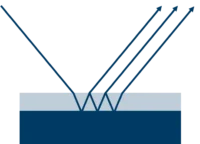
Thin film thickness and refractive index are typically measured using ellipsometry or spectral reflectometry. Spectrometers covering the UV VIS NIR range collect spectral data, which are then analyzed with optical models to determine film properties. These measurements ensure that deposited layers meet design specifications for thickness, uniformity, and optical characteristics.
How does optical spectroscopy support endpoint detection?
Endpoint detection ensures that plasma processes such as etching and deposition stops at exactly the right moment. Optical Emission Spectroscopy (OES) systems monitor plasma chemistry in real time through a window in the chamber to determine when a layer has been fully etched or when a deposition step has completed.
Spectrometers used for this purpose typically cover 190–1100 nm and require high resolution, high dynamic range, strong signal‑to‑noise performance, and low stray light to detect subtle spectral changes reliably.

How is optical spectroscopy used to control wet chemistry and other semiconductor processes?
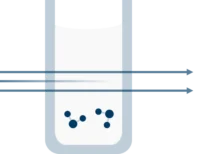
Wet chemical processes require tight control to ensure consistent etching and cleaning. Several different types of spectroscopy techniques are used depending on the exact chemistry to be analyzed:
• UV-VIS absorption for chemical concentration
• NIR for organic compounds and contaminations
• Raman for certain compounds and structural changes
These measurements help maintain process stability, reproducibility, and overall yield.
The spectrometers we offer for semiconductor manufacturing
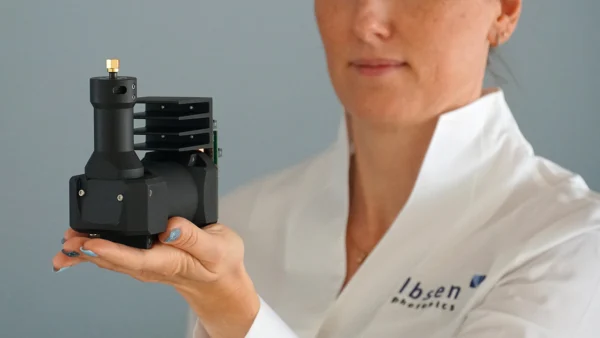
Our UV‑VIS spectrometers are compact, high‑performance, and mechanically robust, making them ideally suited for integration into metrology instruments for semiconductor manufacturing. Their small footprint, high‑speed acquisition, and industrial‑grade stability enable reliable operation even in demanding environments.
For Raman spectroscopy, we offer configurations suited for 532 nm, 785 nm and 830 nm laser excitation, supported by a several cooled detector options to match the requirements of different applications. Our Raman spectrometers are exceptionally sensitive thanks to the use of near‑100% efficiency transmission gratings.
Our NIR spectrometers are robust units optimzed for different applications, from cost-efficient, compact spectrometers for mass-deployment of spectral sensors to spectrometers with the highest sensitivity and best signal-to-noise ratio.
For more information about our spectrometers for the various spectroscopic techniques please select below.
UV-VIS: UV (190-435 nm) | VIS (360-830 nm) | UV-VIS (190-850 nm)
NIR: NIR (900-2100 nm)
Raman: 532 | 785 | 830
More resources
Want to know more?
For further information see below.