
OEM spectrometers for security and threat detection instrumentation
High‑performance spectral sensors for advanced security screening and threat detection
Modern security screening relies on a wide range of technologies — each optimized for different types of threats and operational environments. Optical spectroscopy plays a key role in this landscape by providing fast, non‑contact identification. Ibsen Photonics provides OEM spectrometers purpose‑built for integration into next‑generation security, threat‑detection, and first‑responder instruments, enabling accurate detection of explosives, narcotics, and hazardous chemicals across diverse field environments.
Why choose Ibsen’s spectrometers for security and threat detection?
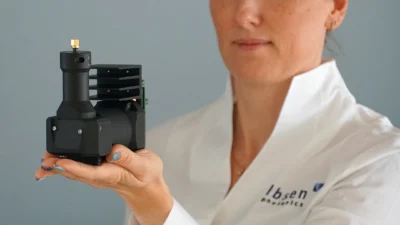
As a dedicated OEM supplier, Ibsen Photonics delivers high performance spectrometer modules engineered for seamless integration into customer instruments. We focus on the precision optomechanical hardware that forms the core of modern spectral sensing systems, and we design and manufacture modules that withstand demanding environmental conditions such as vibration, large temperature swings, and mechanical shock. With ISO 9001 certification and a proven track record of shipping thousands of units each year, we are a trusted partner for high volume, field ready applications.
Why leading OEMs partner with Ibsen:
Where is optical spectroscopy used in security and threat detection?
Optical spectroscopy is used across a wide range of security and emergency‑response operations. Airport security teams, border control and customs officers, police and forensic units, first responders, hazmat teams, and military EOD specialists all rely on spectroscopic tools to identify explosives, narcotics, toxic chemicals, and unknown substances quickly and accurately.
Explosives identification
Raman spectroscopy plays a central role in the on‑site identification of explosive materials, offering fast and highly specific chemical fingerprints for substances such as TATP, RDX, PETN, TNT, and other peroxide‑based compounds. In parallel, UV‑excited fluorescence can reveal characteristic emission signatures from many organic explosives. Together, these optical techniques are commonly used in modern handheld and portable security instruments, enabling field teams to quickly assess potential threats with confidence and minimal sample handling.

Narcotics and controlled‑substance detection
Border control, customs officers, and first responders rely on Raman and NIR spectroscopy when they need to identify controlled substances quickly and with confidence. These techniques help them distinguish potent synthetic opioids such as fentanyl, as well as widely encountered narcotics including cocaine, heroin, and methamphetamine. They are equally important for detecting the many cutting agents and adulterants that often complicate field analysis.
Toxic industrial chemical (TIC) and hazardous‑gas detection
UV absorption spectroscopy is a powerful method for detecting a range of reactive and potentially hazardous gases, including nitrogen dioxide, sulfur dioxide, chlorine, ammonia, and ozone. These gases exhibit strong and distinctive absorption features in the ultraviolet region, which makes UV based instruments highly effective for fast and selective identification. The ability to monitor these gases in real time is essential in situations involving industrial accidents, chemical spills, hazmat response, and the protection of critical infrastructure. By providing immediate insight into the presence and concentration of harmful gases, UV absorption systems support safer decision making and help emergency teams respond with greater confidence.
Unknown powder and liquid identification for first responders
When first responders come across an unknown substance at an accident scene, inside a suspicious package, or during the cleanup of a chemical spill, they need a method that can deliver fast and reliable answers without direct contact. Raman and NIR spectroscopy provide exactly that. These techniques allow teams to identify powders, liquids, and residues within seconds, reducing the need for physical handling and helping them make informed decisions in situations where time and safety are critical.
Our spectrometers for security and threat detection
All Ibsen spectrometers are built around our proprietary, in‑house manufactured fused‑silica transmission gratings, which deliver the world’s best diffraction efficiency. Our modules are engineered to be compact, rugged, and thermally stable, enabling instrument designers to focus on system‑level innovation rather than the spectrometer itself.
For Raman spectroscopy, we offer configurations suited for 532 nm, 785 nm and 830 nm laser excitation, supported by a several cooled detector options to match the requirements of different applications. Our Raman spectrometers are exceptionally sensitive thanks to the use of near‑100% efficiency transmission gratings.
Our NIR spectrometers are robust units optimized for different applications, from cost-efficient, compact spectrometers for mass-deployment of spectral sensors to spectrometers with the highest sensitivity and best signal-to-noise ratio.
Our UV spectrometers are compact, high‑performance, and mechanically robust, making them ideally suited for integration into handheld units. Their small footprint, high‑speed acquisition, and industrial‑grade stability enable reliable operation even in demanding environments.
We commonly customize OEM spectrometers to specific instrument requirements ensuring the right balance between cost and performance.
For more information about our spectrometers for the various wavelength ranges please select below:
NIR: NIR (900-2100 nm)
Raman: 532 | 785 | 830
UV: UV (190-435 nm)
More resources
Want to know more?
For further information see below.