Process analytical technology

What is Process Analytical Technology (PAT)?

Process Analytical Technology (PAT) is a framework introduced by the U.S. FDA in 2004 to improve the design, monitoring, and quality control of pharmaceutical and food production processes. The goal of PAT is to ensure consistent final product quality by understanding and controlling the manufacturing process in real time.

PAT works by monitoring and adjusting Critical Process Parameters (CPPs) to maintain the desired Critical Quality Attributes (CQAs). When CPPs are measured continuously — for example, using in line sensors — manufacturers gain deeper process understanding, reduce over processing, improve consistency, and minimize waste.

Reliable, high quality data is essential for PAT. One of the most effective tools for generating such data is the near infrared (NIR) spectrometer, which can be placed directly in the production line for continuous monitoring.

Why are Ibsen’s NIR spectrometers well suited for real time PAT monitoring?

Ibsen’s NIR spectrometers are engineered specifically for demanding PAT environments:

  • High optical throughput using in house transmission gratings with up to 90% diffraction efficiency and NA 0.22 optics

  • Rugged, solid state construction with no moving parts, verified through extensive environmental qualification

  • Excellent instrument to instrument consistency thanks to decades of OEM manufacturing experience and tightly controlled production tolerances

  • Multiple wavelength ranges (800–1100 nm, 900–1700 nm, 1100–2100 nm) to match specific PAT chemistries

  • Flexible detector options (256 or 512 pixels) to optimize resolution for chemometric models

  • Platforms for every need including high sensitivity ROCK NIR and XNIR for demanding applications, and compact PEBBLE NIR for large scale deployment

ROCK NIR spectrometer and grating for PAT

Why in-line monitoring?

In line monitoring provides immediate feedback, enabling manufacturers to adjust the process instantly rather than waiting for delayed off line laboratory results. This real time control improves product quality, reduces batch failures, and supports the core purpose of PAT: consistent, data driven manufacturing.

NIR spectrometers in PAT

Why use NIR spectrometers for PAT?

Near infrared (NIR) spectrometers offer several advantages for PAT applications:

  • Robustness and easy integration: NIR instruments are typically more rugged and easier to install directly in production lines than FT IR systems

  • Tolerance to industrial environments: NIR handles moisture, temperature variations, and vibration better than FT IR

  • Non destructive, real time measurements: Ideal for continuous monitoring of organic molecules commonly found in pharma and food processes

  • Chemometric compatibility: Although NIR spectra contain overlapping overtone bands, they work extremely well with multivariate calibration models used in PAT

Why use NIR spectrometers for PAT

What specifications matter most when choosing an NIR spectrometer for PAT?
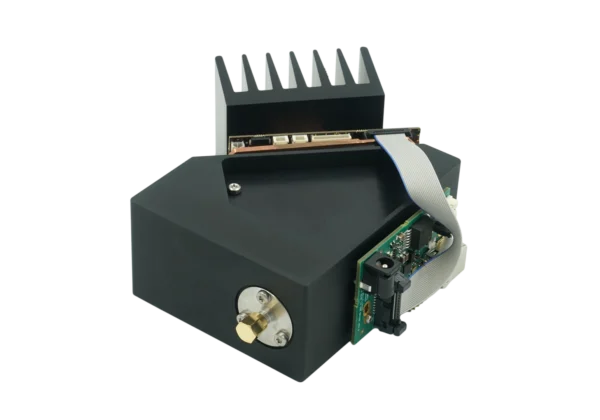
NIR spectrometers

When selecting an NIR spectrometer for PAT, the most important specifications include:

  • High signal to noise ratio (SNR): PAT models require very stable absorbance values. Many applications need <0.001–0.005 AU error, corresponding to SNR ≥ 1,000:1

  • Mechanical robustness: Solid state designs with no moving parts ensure stability under vibration, temperature changes, and mechanical shock

  • High optical throughput: Essential for fast acquisition and sensitivity in real time monitoring

  • Excellent calibration transferability: PAT models must work reliably across multiple instruments and production lines

Our NIR spectrometers for PAT

Our NIR spectrometers are optimized for different applications, from cost efficient, compact spectrometers for handheld devices to the highest performance spectrometers with low stray light and high signal-to-noise ratio.

For more information on our range of spectrometers for NIR absorption spectroscopy, please select your wavelength range of interest:

Wavelength ranges: NIR (900 – 2500 nm) 
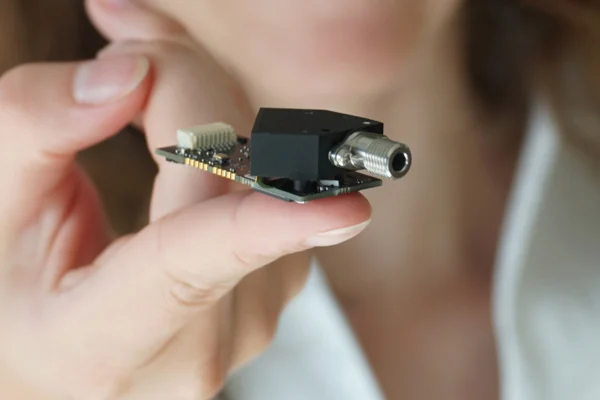
Ultra compact NIR spectrometer

More resources

NIR spectrometers
for system integration

What is NIR spectroscopy?

Handheld NIR spectrometers

Technical notes
and white papers

Other resources by category

Want to know more?

For further information see below.

Ask the experts

Do you want to discuss your spectrometer project with one of our experts? Please fill out the form, and we will contact you as soon as possible.

Visit  our OEM spectrometer pages 

Browse our range of OEM spectrometer products.