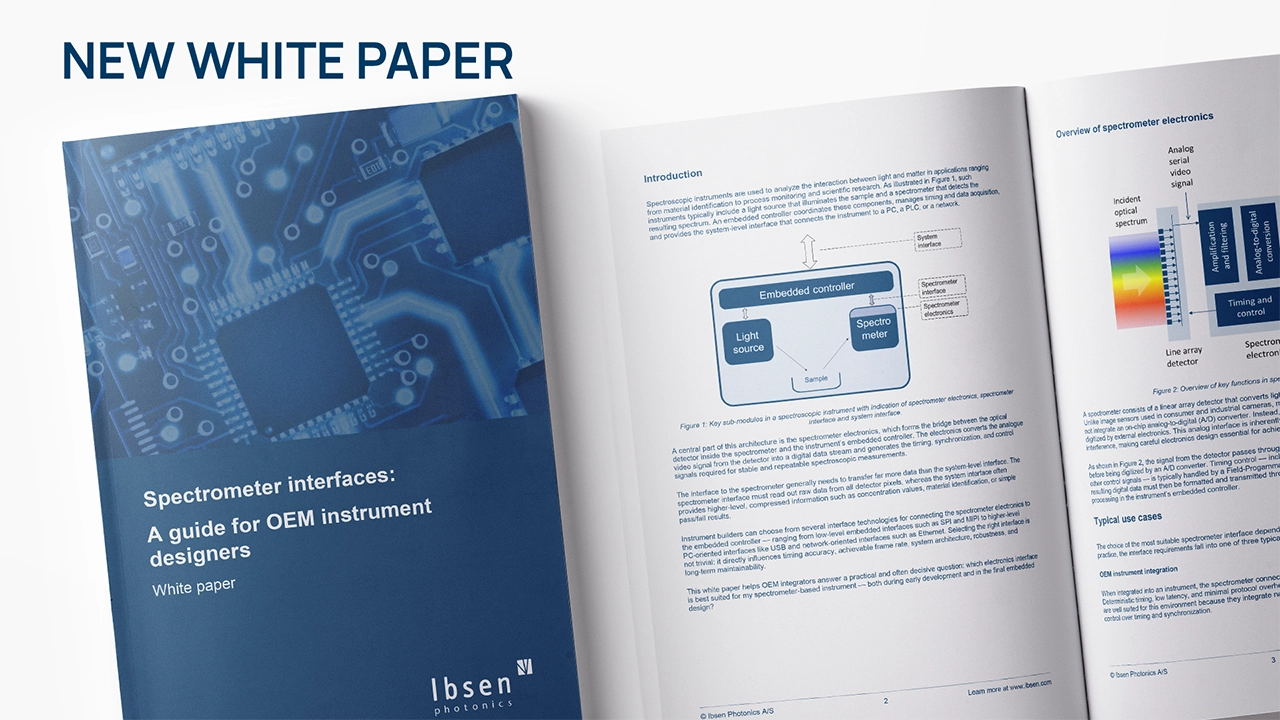
Choosing the right interface technology for connecting a spectrometer to an embedded controller is a critical decision for instrument builders. Options like SPI, MIPI, USB, and Ethernet each come with trade-offs that directly impact timing accuracy, frame rate, system architecture, robustness, and long-term maintainability.
Our new white paper, “Spectrometer Interfaces: A Guide for OEM Instrument Designers,” provides practical guidelines to help you navigate this decision for your specific application. In this paper, you’ll:
- Understand the fundamentals of how USB, Ethernet, SPI, MIPI, and Camera Link operate.
- Compare key characteristics, including maximum frame rate, latency, and implementation complexity.
- Access a clear comparison table for an easy overview of your options.
High-Speed M-DISB-191 Electronics: Direct Interfacing for High-Performance OCT Spectrometers
We have developed the M-DISB-191 electronics, which are ideal for embedded integration inside compact OCT instruments.
This high-speed electronics board utilizes the MIPI-CSI2 data transfer protocol and offers an extensive range of advanced features. The M-DISB’s MIPI interface provides a near-hardware, low-latency connection, eliminating the need for costly frame grabber cards or the overhead of a USB connection. This enables direct interfacing with image signal processors, resulting in a cost-optimized, high-performance system ideal for large-volume production.
We offer several compact OCT spectrometers equipped with the M-DISB-191. If none of them match your exact requirements, you are always welcome to contact us about a custom design.
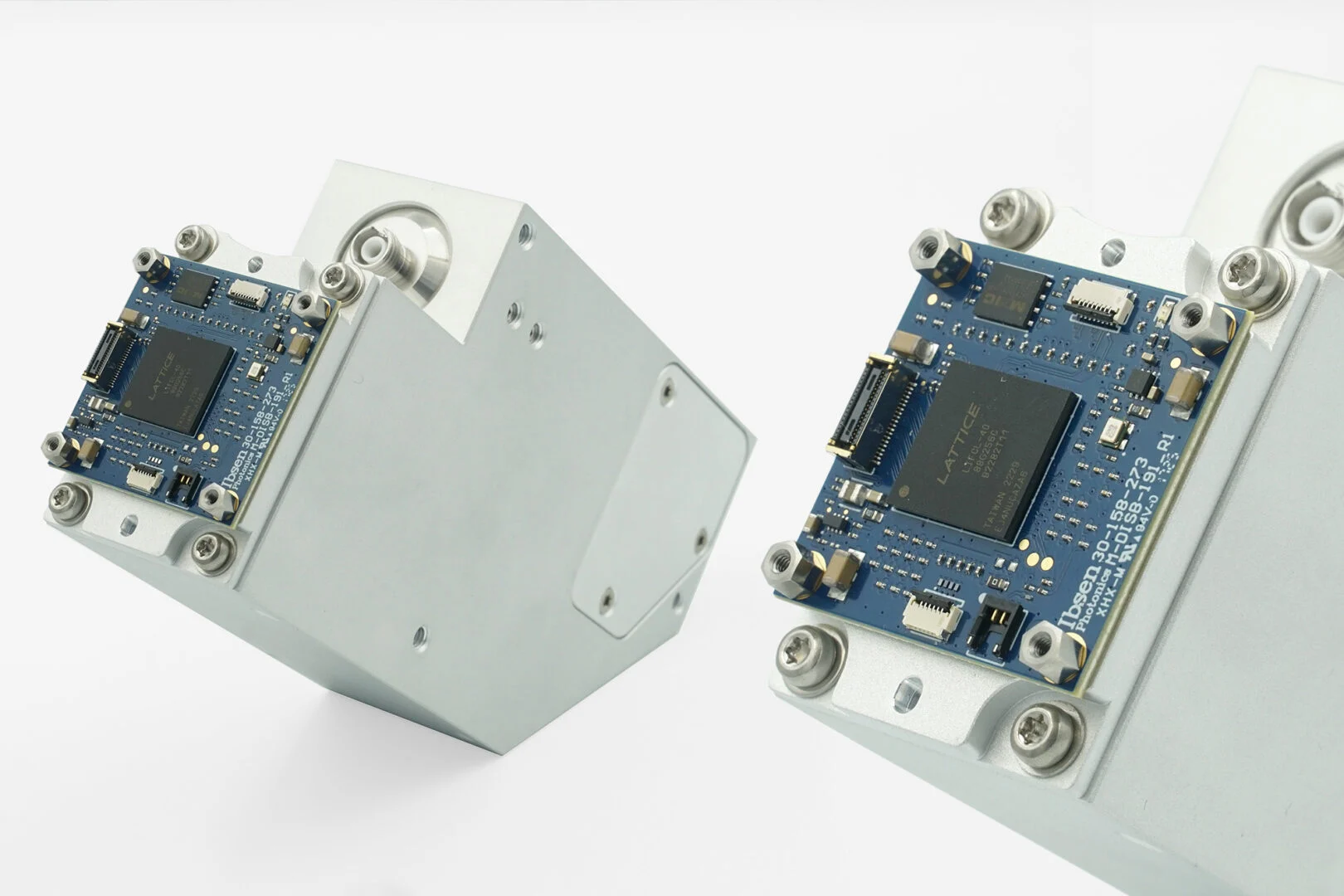
The EAGLE C-OCT-S-90 features our M-DISB-191 electronics paired with the Hamamatsu S17122 CMOS detector achieving line rates of 61 kHz for all 2048 pixels
Ibsen Photonics Earns Ecovadis Gold Medal for Sustainability
At Ibsen Photonics, sustainability is at the core of our mission. We are proud to announce that our commitment to driving innovation while minimizing our environmental footprint and supporting sustainable applications has been recognized with the Ecovadis Gold Medal. This achievement reflects our dedication to innovating for the environment, investing in people and knowledge, and partnering for responsible practices, all to create a meaningful impact on the world.