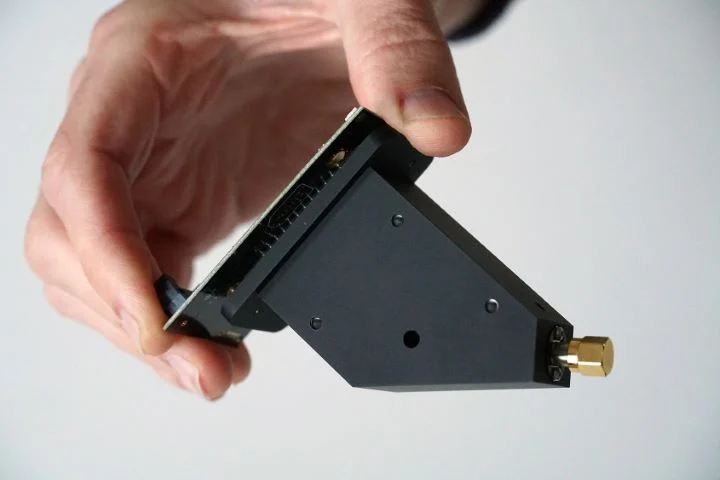
Why does throughput matter in the design and performance of spectrometers? Understanding throughput is key to improving how effectively a spectrometer collects and transmits light, which directly affects its sensitivity and accuracy. In this white paper, we break down fundamental concepts like étendue and explain how the efficiency of optical components such as gratings, lenses, mirrors, and detectors plays a vital role in the overall system’s performance.
If you want to gain deeper insight and enhance your designs, this white paper is for you. It covers the definition and importance of throughput, shows how each component influences it, and offers practical advice to help you achieve high throughput in your spectrometer projects. And you can never have enough light!
Superior SNR across the full spectral range with spectral flattening filter
Even with a spectrometer designed for maximum throughput, achieving a good signal-to-noise ratio across the full wavelength range can still be challenging. Why is that? Because the resulting spectrum depends on the spectrometer’s response, the light source profile, and the sample itself.
At certain wavelengths, the detector may reach saturation, whereas at other wavelengths, the signal can be very weak. This is where a spectral flattening filter becomes essential. It ensures a uniform signal intensity across the full spectral range, preventing regions with low signal-to-noise ratios and thus enhancing data quality. When combined with optimized throughput, the filter maximizes the detector’s dynamic range, enabling accurate and reliable measurements across the full spectral range.
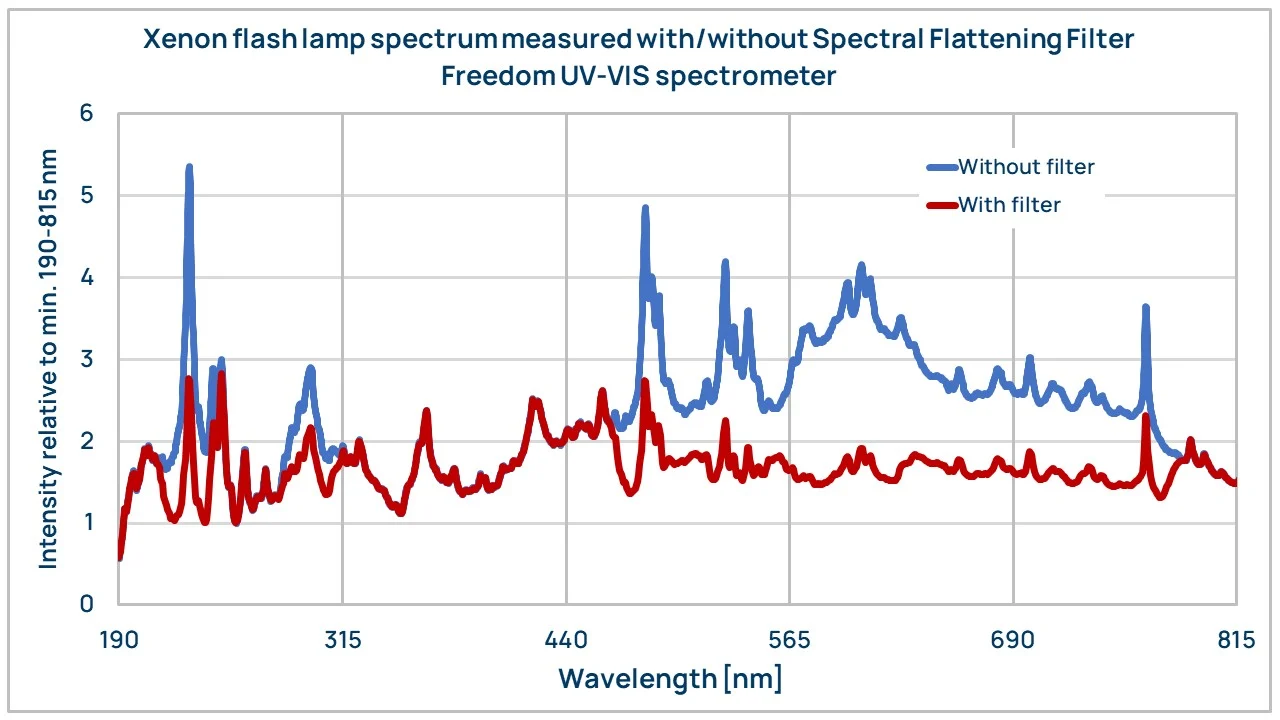
Achieving a flat spectrum with an exceptional signal-to-noise ratio is particularly challenging in broadband spectroscopy, such as UV-VIS and UV-NIR applications. At Ibsen Photonics, we effectively addressed this challenge by integrating customer tailored spectral flattening filters into our high throughput spectrometers. For example, we successfully flattened the xenon flashlamp spectrum measured with our FREEDOM UV-VIS spectrometer (as shown in the above image). This filter attenuated intense spectral peaks to match the lamp’s broadband intensity, ensuring superior signal-to-noise ratio across the entire measurement range. This demonstrates our commitment to providing tailored solutions and enhancing spectrometer performance.
High throughput spectrometers for speed and sensitivity
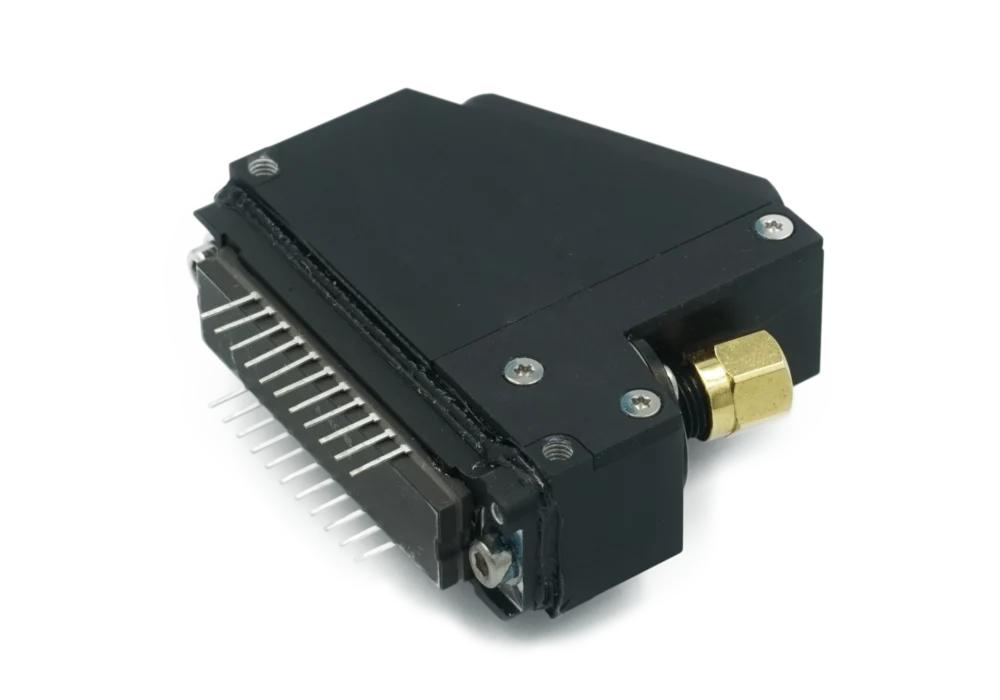
Selecting the right spectrometer is critical for applications demanding high throughput, especially when working with low-light signals or requiring rapid data acquisition. High throughput, enabled by our own highly efficient transmission gratings, has been one of the key differentiators of our spectrometers. A prime example is our Compact ROCK VIS spectrometer, which provides a numerical aperture of 0.2 and supports detector pixel heights up to 3 mm. It incorporates a broadband VIS transmission grating with 60-80% absolute efficiency across the 360-760 nm range.
We offer spectrometers covering a broad wavelength range of 173-2500 nm, designed for high resolution and optimal optical throughput, providing an excellent balance of performance, resolution, and sensitivity. For challenging broadband spectroscopy projects like UV-VIS and UV-NIR, we provide customized solutions to meet your needs. Collaborating closely with customers to meet their specific requirements, we excel in design, prototyping, and volume production, with over 60,000 spectrometers active in the field.