As gas sensing and hydrocarbon monitoring applications become more demanding, instrument developers face increasing pressure to deliver higher sensitivity, better selectivity, and long-term stability.
While traditional single-wavelength sensors remain suitable for basic detection, full-spectrum UV and NIR spectroscopy opens new possibilities for advanced monitoring of greenhouse gases, toxic gases, hydrocarbons, and industrial processes. In this newsletter, we explore why full-spectrum solutions are becoming a preferred approach for next-generation gas and oil sensing instruments.
As a dedicated OEM supplier, Ibsen Photonics provides high-performance spectrometer modules designed specifically for seamless instrument integration. We specialize in the compact optomechanical hardware that serves as the core of modern spectral sensing instruments from UV to NIR.

Why full-spectrum analysis delivers better gas measurements
Many conventional gas sensors measure only a single absorption wavelength. While effective for simple detection tasks, this approach limits the amount of information available from the sample.
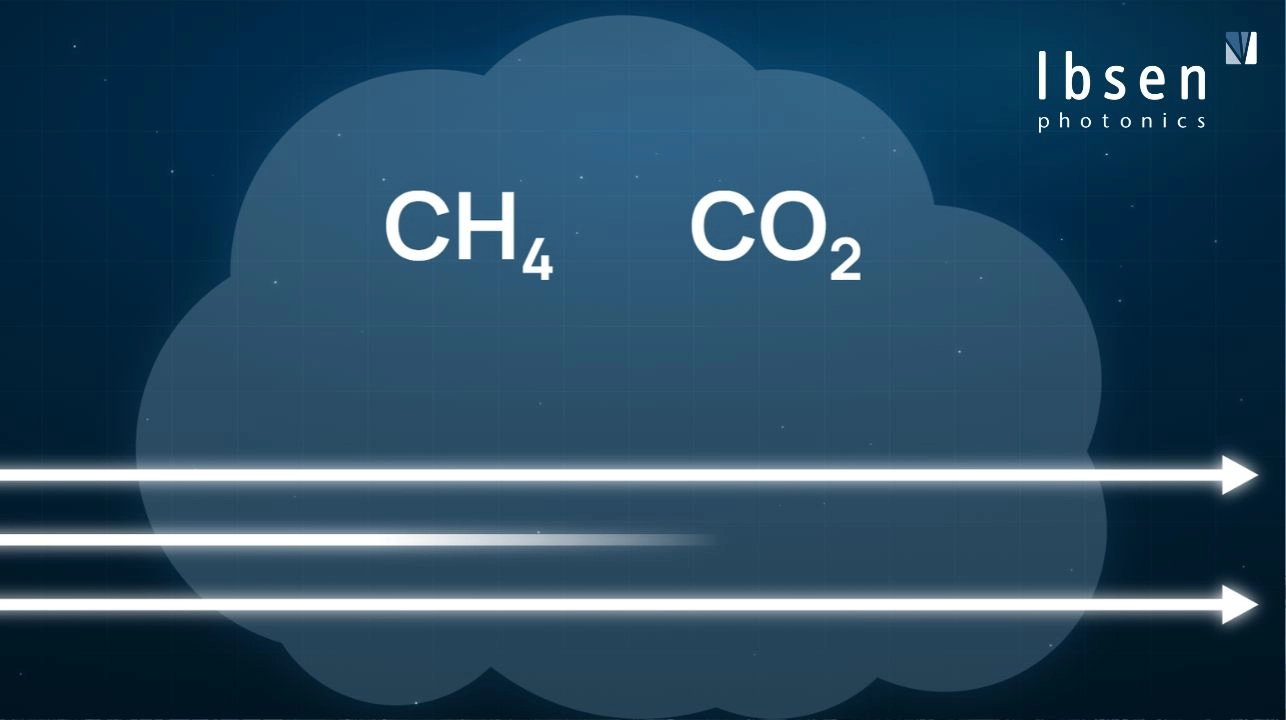
Full-spectrum UV and NIR spectroscopy captures the entire optical fingerprint, enabling higher accuracy, improved selectivity, and the ability to distinguish multiple gases within complex mixtures.
For applications such as methane, carbon dioxide, sulfur dioxide, and nitrogen dioxide monitoring, access to the full spectrum can significantly enhance measurement confidence.
Built for harsh and hazardous environments
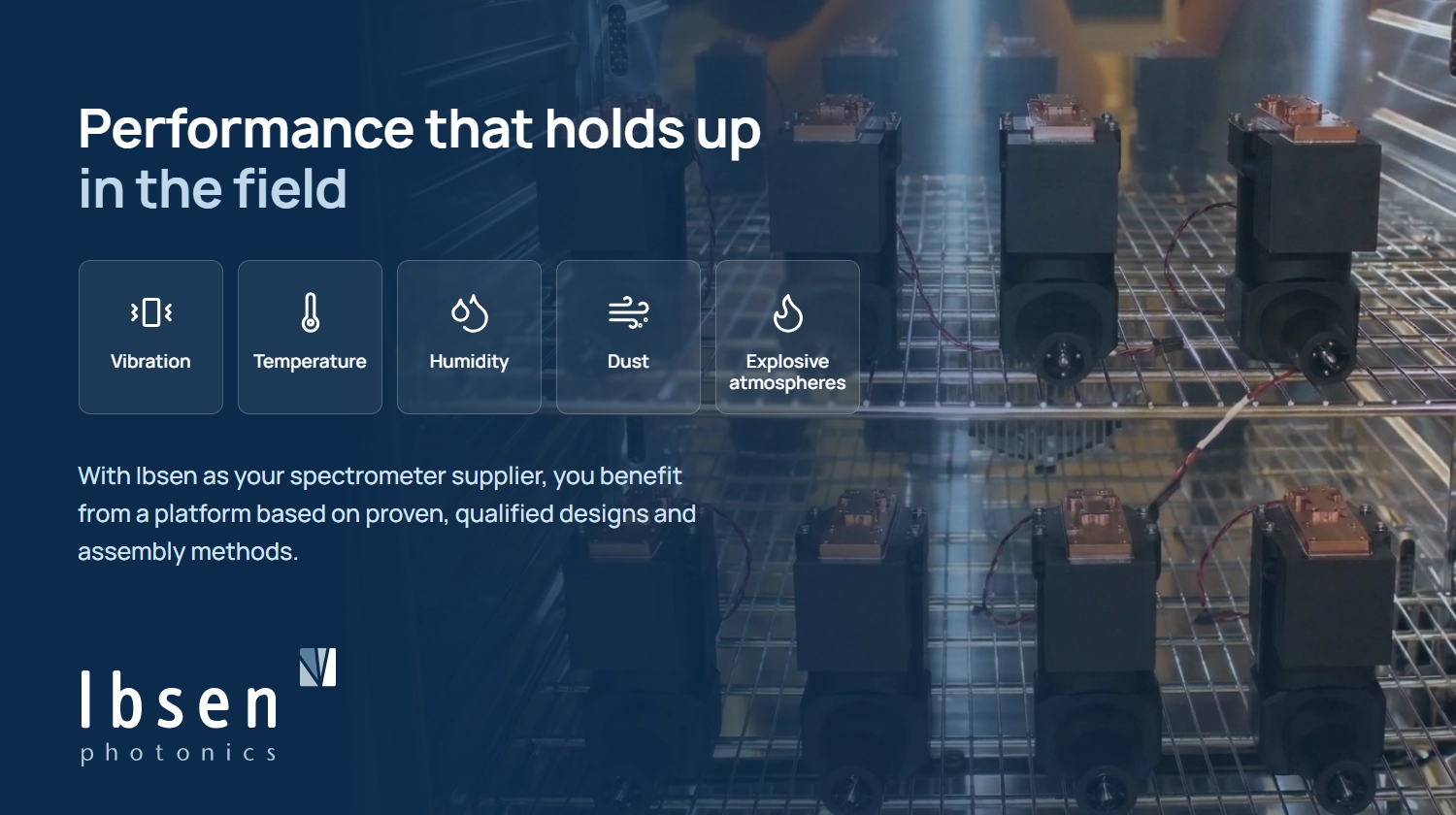
Gas and oil monitoring systems are often deployed in environments characterized by vibration, temperature variations, humidity, dust, and potentially explosive atmospheres. Spectrometers used in these applications must therefore provide both high optical performance and long-term reliability. Designs based on fused-silica transmission gratings with no moving parts offer a robust solution capable of maintaining performance under demanding operating conditions.
Ibsen delivers robust spectrometers built for demanding environments. By choosing Ibsen as spectrometer supplier, you benefit from a platform based on proven, qualified designs and assembly methods.
Beyond gas detection: monitoring oil, hydrocarbons, and FBG sensors
Spectroscopy plays an important role beyond gas analysis. UV fluorescence and NIR absorption techniques are widely used for oil-in-water monitoring, hydrocarbon characterization, and process control.
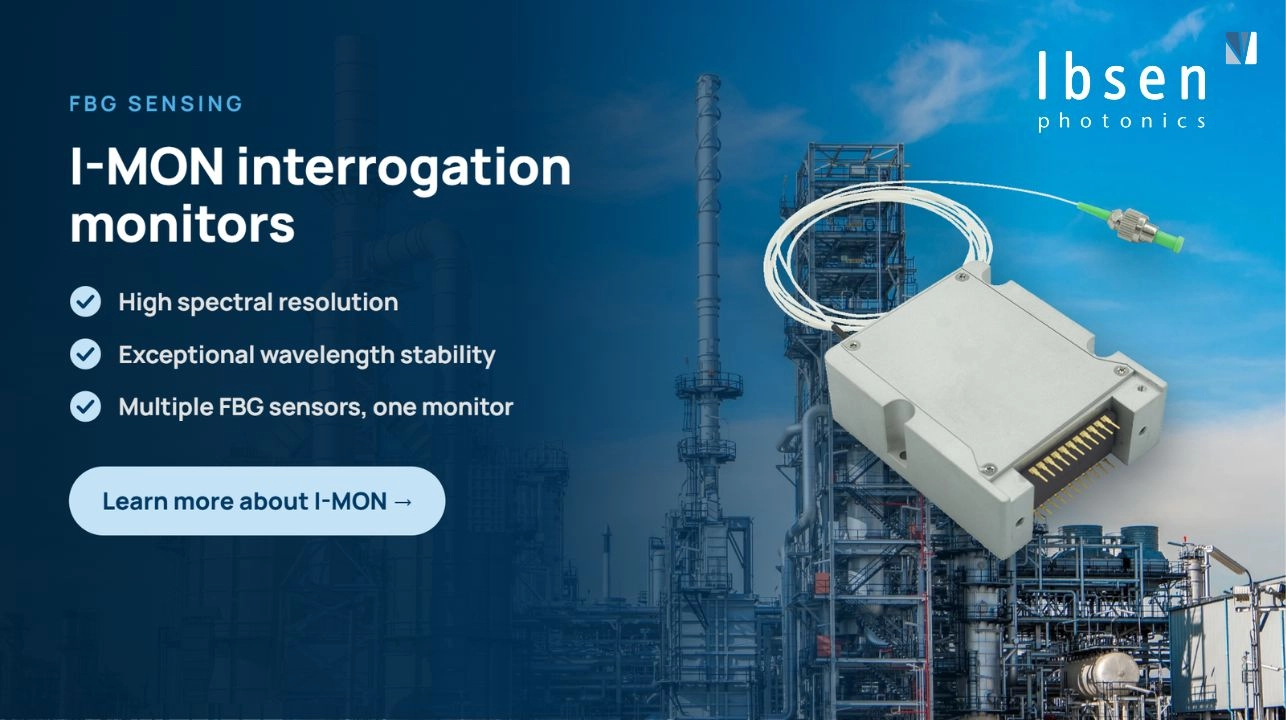
Spectrometers are also increasingly used to interrogate Fiber Bragg Grating (FBG) sensors for monitoring temperature, pressure, and strain in wells, pipelines, and critical infrastructure. These applications require high spectral resolution and exceptional wavelength stability to detect even very small spectral shifts.
Ibsen’s I-MONs are spectrometers developed specifically for monitoring extremely small wavelength shifts in FBG sensing system using multiple sensors.
Visit us at OFS30 and talk through your design
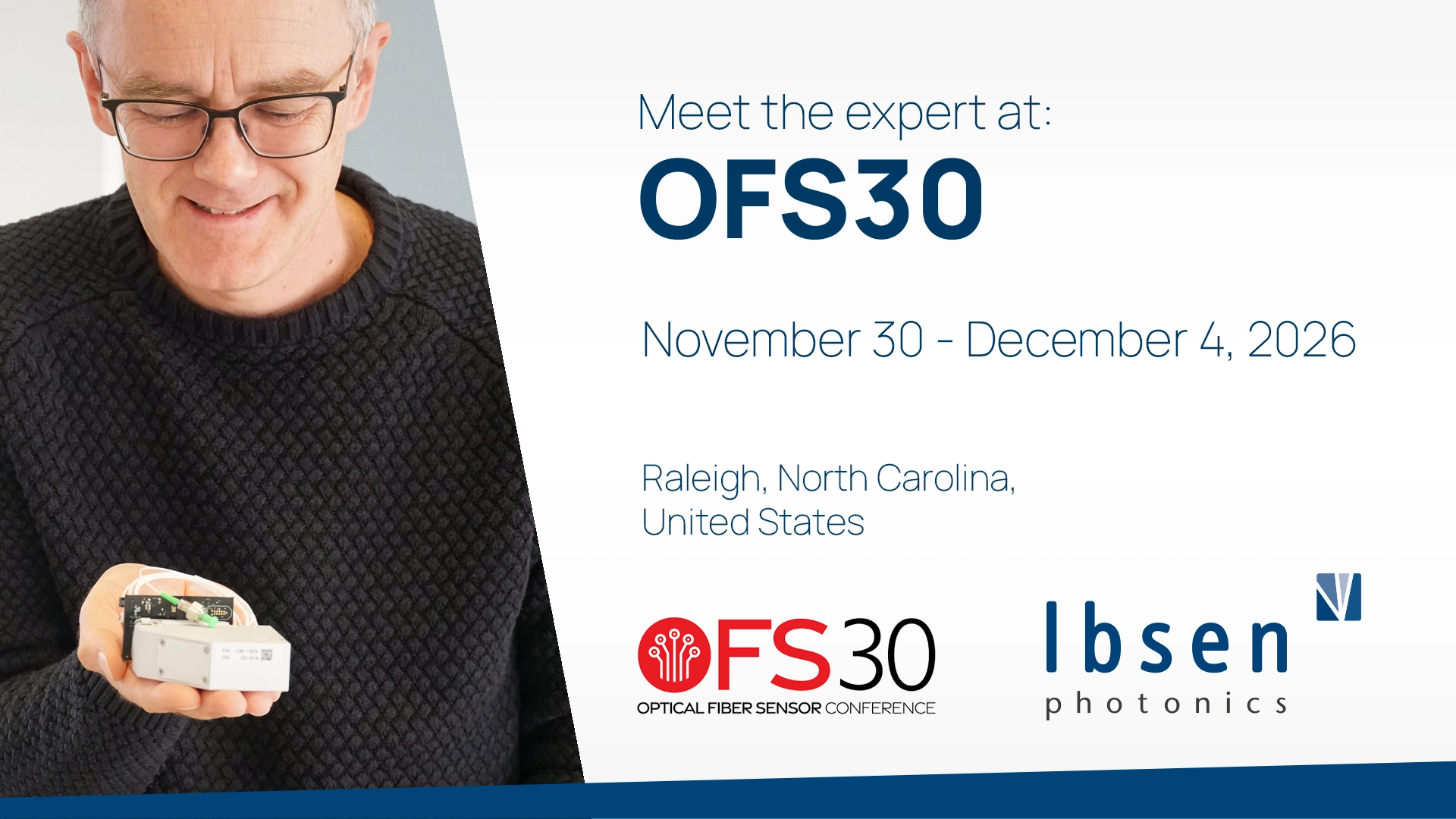
The 30th International Conference on Optical Fiber Sensors (OFS-30) brings together researchers, innovators, and industry leaders working at the forefront of optical sensing technologies.
Ibsen Photonics will be exhibiting at the conference in Raleigh, North Carolina, from November 30 to December 4, 2026. Please connect with our VP of Sales, Bjarke Rose, to discuss the latest developments in our I-MONs, Phase Masks and general spectrometers for sensing applications.